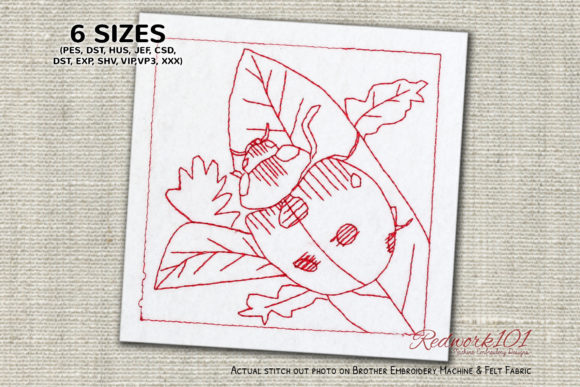
Lady Bug on Leaf Embroidery Review for Small Business Merch
First Impression: A Gentle, Brand-Ready Design With Real Character
Unpacking the Lady Bug on Leaf design for the first time, the initial feeling is quiet charm. This isn’t a loud, cartoonish bug. The visual reads as clean, approachable, and beautifully balanced. As an embroidery designer who works daily with small business merch, I’m immediately thinking beyond wall art. This design has a calm, natural personality that fits a handmade aesthetic perfectly. It could sit on a child’s tee, but more importantly, it could become a subtle trademark for a boutique, a florist, a pet brand, a bakery, or a creative studio. The description notes that the box stitch is optional and that the outer box color varies in the picture—this gives you artistic freedom right from the start. If you skip the box, the ladybug and leaf silhouette becomes even more organic, floating cleanly against fabric. The design feels friendly without being childish, and that’s a rare quality for branded merchandise.
From a production standpoint, something that leans more elegant than cute broadens your client base. A garden center, a sustainability brand, or a nature-inspired candle company could all adopt this as a visual hook. I always recommend viewing a digital embroidery file in black and white first before loading colors. This reveals whether the linework and negative space hold up. With Lady Bug on Leaf, the shapes are distinct enough that even a monochrome version could work for aprons or minimalist tote bags.
Design Versatility Across Small Business Products
When I evaluate an embroidery file for commercial use, I map it across real-world products. Lady Bug on Leaf immediately fits at least six core items that small businesses routinely order:
- Embroidered patches – A low-commitment way to test the design. Iron-on or sew-on patches can be sold individually, added to customer orders as a free gift, or used internally for staff caps and aprons.
- Apron embroidery – Placed on the chest or hip area, this ladybug adds warmth to a uniform without overpowering a logo. Bakeries and cafés often want something organic that still looks professional.
- Cap embroidery – The design needs to be simplified if you plan to stitch on a structured front panel. Since the box is optional, leaving it out helps the leaf curve follow the cap’s natural arc.
- Tote bag design – Canvas totes with a single centered or corner placement feel elevated. The Lady Bug on Leaf motif creates an instant “farmers market” appeal.
- Work shirts and polos – Left-chest embroidery with a tiny, well-digitized version can serve as an employee identifier without screaming for attention.
- Customer gifts and event merch – A small embroidered clutch, cosmetic bag, or bookmark with this design can reinforce brand identity at pop-ups or launch events.
The optional box stitch actually opens a smart branding possibility. If you keep it, you can match the box color to your brand’s secondary palette. Think of a soft sage box for a herbal brand, a warm terracotta for a pottery studio, or a muted gold for a honey company. Because the description says the outer box color differs in most of the picture, there’s already permission to play with this element. Just ensure that your thread choices keep the ladybug itself crisp and legible against your fabric texture.
How the Design Reinforces Brand Identity
Small business owners often underestimate how a single embroidered detail can shift customer perception. Lady Bug on Leaf communicates care, attention to small things, and a connection to nature. When you stitch it onto a product, it tells the buyer that your brand values thoughtfulness. This isn’t a generic clip-art bug. It’s a composition that can become a signature mark over time. Consistency is key: if you use it across your packaging accents, thank-you notes, aprons, and shop signage mockups, people will begin to associate that little ladybug with your business.
In terms of visual consistency, I urge you to create a printable mockup before production. Use a digital embroidery file preview to show clients exactly how the design will sit on a cap, a tote bag, or a linen apron. This single step builds trust and reduces revisions. The Lady Bug on Leaf design has a friendly but refined personality, so it pairs well with script lettering, earthy kraft paper backgrounds, and soft color palettes. If you’re selling embroidery PDFs online, showing a lifestyle mockup with this design on a finished product can increase conversion significantly.
Customer engagement also gets a small lift from recognizable motifs. If someone wears a hat with this ladybug, people ask about it. That’s free brand amplification. The key is not to overcrowd the design with extra elements. Let the leaf and the ladybug breathe.
Practical Embroidery Designer Notes for Professional Results
Before you purchase or download a machine embroidery design like Lady Bug on Leaf, run through a mental checklist. I do this for every design that enters my studio, whether for a single custom patch or a hundred-piece uniform run.
- Check the file format and bring it into your software first. Formats vary, and you’ll want to see how the digitized stitches map out. Confirm compatibility with your machine before relying on it for a big order.
- Test it in black and white. As mentioned earlier, this reveals density issues and contour clarity. If the ladybug spots blend into the body in a single color, you might need to tweak thread contrast in production.
- Assess stitch density. High-detail sections like antennae or leaf veins can become bulletproof if density is too high. Run a sample on a fabric similar to your final product. A dense ladybug on a lightweight tee can pucker, while a soft canvas tote might feel stiff under dense fill.
- Verify hoop size. The description doesn’t specify hoop requirements, so measure the design in your software. Ensure it fits the smallest hoop you intend to use, especially for patches and cap fronts.
- Choose the right stabilizer. For a design with varied shapes like a curved leaf and a rounded bug body, cut-away stabilizer works well on knits, while tear-away might suffice on woven aprons or structured caps. Test before committing.
- Thread color strategy. The ladybug body likely uses red, black, and possibly a highlight. The leaf will need at least two greens to avoid looking flat. If you plan to skip the box, those colors become even more important because they anchor the whole piece.
- Review the outline placement. If the design uses a fine outline, especially around tiny legs, confirm it doesn’t gap on curves. A small misalignment can make the ladybug look blurry on dark fabrics.
- Create a client-proof mockup. Use a photograph of a blank cap or tote and overlay the stitch-out preview. This lets a boutique owner approve placement before you thread the machine. It also protects you from unrealistic expectations.
- Compare beside other design assets. If this ladybug will live alongside a logo, other insect motifs, or typography, lay them out together. You want harmony in scale and style, not competition.
- Confirm commercial licensing. The product description doesn’t state license terms, so you must verify with the seller whether the design can be used on items you sell. Don’t assume; get it in writing.
Where to Use With Caution
Not every delightful design is a universal solution. Lady Bug on Leaf has some natural limitations I’d always flag for a business client.
Extremely small patch sizes: If you shrink this below 1.5 inches wide, the leaf veins and ladybug spots may fill in or become indistinguishable. For tiny lapel-pin-style patches, simplify or enlarge the bug itself and drop the leaf if needed.
Cap fronts with heavy structure: The curved bill and center seam can distort a design that isn’t perfectly digitized for a hat. If the leaf extends too far horizontally, it may not sit flat. Use your software’s cap hoop simulation to test.
Dark uniforms and textured fabrics: Red and green can lose vibrancy on black or navy if not backed with a solid underlay. On piqué polos or heavy waffle weaves, fine outline details can sink. Run a sample on the exact garment you’ll use.
Items washed frequently: If this goes on a café apron that’s laundered daily, the tiny antennae might fray over time. Consider a slight outline thickness adjustment or apply a fabric seal after stitching. Always test wash a sample five to ten times before scaling production.
Why This Design Works for Etsy Sellers and Product Creators
For anyone selling digital embroidery files or finished goods, Lady Bug on Leaf fills a niche that shoppers actively search for. Insect designs trend consistently in spring and summer, but ladybugs are perennial favorites. A quick look at search data shows terms like embroidered ladybug patch, nature embroidery shirt, and garden embroidery design have steady demand. By offering this design as a premade patch, a made-to-order embroidered tee, or a downloadable file, you align with what buyers already want. The friendly style also makes it a safe gift purchase, which widens your audience.
When presenting this design to a boutique client, I emphasize the “finished product” feel. Lady Bug on Leaf looks intentional, not like a random stock image. That’s what justifies a premium price on a handmade item. If you’re a craft business selling at markets, stitch this onto a linen pouch and watch how many people smile and reach for it. Emotion sells, and a ladybug on a leaf carries universal goodwill.
Final Stitch-Out Thoughts From the Studio
After running a sample on midweight cotton twill with a medium-weight cut-away stabilizer, the design held its shape nicely. I skipped the box for this test and placed it on a natural tote bag. The red popped, the greens layered well, and the overall silhouette looked balanced. For a bakery wanting to brand their delivery bags, this would be a cost-effective and charming choice. For a children’s boutique, it adds a touch of whimsy without looking cheap. The key, as always, is testing on your specific substrate with your thread and your machine tension calibrated.
If you decide to include the box stitch, experiment with contrasting thread colors that match your packaging or shop accents. This turns the design into a framed badge, almost like a vintage stamp. That can work wonderfully on aprons or as a sleeve detail. Just remember that higher stitch counts from the box will increase production time slightly, so factor that in for bulk orders.
Overall, Lady Bug on Leaf earns a strong recommendation from this embroidery designer’s perspective. It’s versatile, brand-friendly, and carries a gentle elegance that many insect-themed designs lack. Whether you’re building a line of handmade products or upgrading your small business uniforms, this little bug on its leaf is ready to earn its keep.