Cute Cartoon Bee Sketch: A Designer‘s Review for Merch
First Impression: Playful Charm with Brand Potential
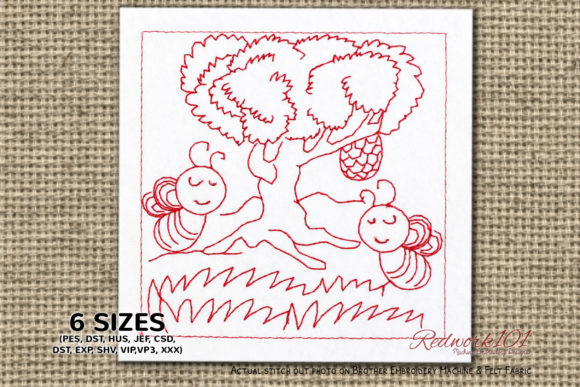
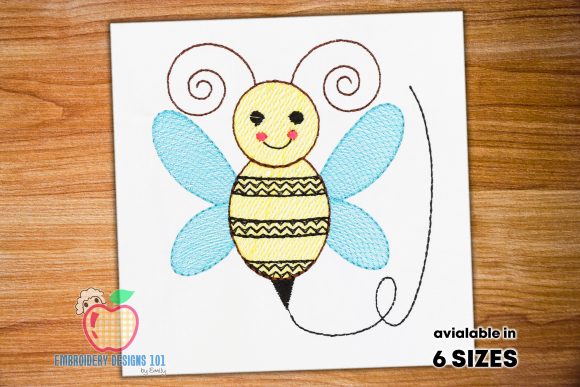
Opening the Cute Cartoon Bee Sketch file, the first thing that strikes me is its clean, friendly personality. As an embroidery designer who regularly tests files for small business clients, I immediately see the value for brands that want to feel approachable, handmade, and cheerful. The design is described as a quick stitch with multiple sizes, and notably, it is not 100% filled. That means the fabric texture shows through the bee’s body, creating a soft, almost sketched look that mimics hand-drawn illustration. For a café, bakery, or boutique, this kind of visual softness translates directly into a warmer brand experience. It doesn’t scream “mass-produced”; it whispers “crafted with care.” The cartoon character is bold enough to catch the eye but simple enough to reproduce cleanly across different items, from aprons to caps. This is exactly the kind of design asset that turns a plain uniform into a conversation starter.
Real-World Business Applications for the Bee Design
Over the years, I’ve digitized and tested hundreds of machine embroidery design concepts, and the most successful small business merch often relies on one versatile emblem that works across everything. The Cute Cartoon Bee Sketch fits that role beautifully. Here are the scenarios where it shines:
- Embroidered patches: Its light fill and sketch style make it a natural for woven or twill patches that can be sewn onto jackets, bags, or caps. The open areas let the fabric base show, giving a vintage, artisanal feel.
- Apron embroidery: For a florist, honey shop, or bakery, a chest-level bee on a cotton or linen apron immediately communicates a gentle, nature-inspired brand identity.
- Cap embroidery: Tested on a unstructured dad hat or a classic low-profile cap, the bee sits comfortably on the front panel. The quick stitch avoids dense bullet-proof layering that can distort on curved surfaces.
- Tote bag design: Placed on a canvas tote, this sketchy bee becomes a walking advertisement. Its simplicity keeps the production cost low while still feeling like a thoughtful, handmade product.
- Work shirts and uniforms: As a sleeve detail or a small left-chest logo accent, the bee adds personality without overwhelming a professional look. It works for tea rooms, pet boutiques, or children’s stores.
- Customer gifts and event merch: Stitch it on mini pouches, bookmarks, or fabric gift tags. The playful line art aesthetic makes each item feel like a little collectible.
What I really appreciate from a commercial standpoint is that the design is labeled a quick stitch. For small businesses doing in-house embroidery or fulfilling Etsy orders, time equals money. A fast-running file scaled across multiple sizes means you can react to orders quickly without sacrificing quality.
Where to Use Caution During Production
Even the best embroidery file has its sensitive spots. With the Cute Cartoon Bee Sketch, the “not 100 filled” characteristic is both a strength and a limitation. Because the stitching relies on open areas and sketch-like lines, you must be mindful of the base fabric color and texture. On a very dark uniform, the thin, light-fill areas might lose definition if the thread color doesn’t have enough contrast. I always recommend testing on actual garment swatches first.
Another consideration is size. The product description mentions multiple sizes are included, but when scaling down to the smallest version—say a tiny patch for a keychain or a cap side—check that the sketch lines remain distinct. On extremely small runs, the fine details of the bee’s antennae or wing scribbles can become muddy. High stitch density on a tiny area with a lightweight fill could pucker if you don’t use the right stabilizer.
For curved surfaces like baseball caps, avoid placing the bee near a seam or on the very edge. The sketch style depends on clean, unbroken arcs; a distorted curve from hooping can ruin the light, delicate feel. Also, if you plan to wash the item frequently (uniforms in a café, for instance), do a wash test. The open fill leaves fabric exposed, which means the design won’t crack like a heavy fill, but the thread itself needs to hold up to friction. A poly-cotton blend thread often works best.
How the Bee Sketch Elevates Brand Identity
When I consult with small business merch creators, I often remind them that embroidery isn’t just decoration—it’s a texture-based branding tool. The Cute Cartoon Bee Sketch instantly adds a hand-drawn, artisanal character that can unify an entire product line. A customer sees that gentle bee on a tote bag, then on an apron, then on a patch sewn onto a cap, and a visual signature forms. This builds recognition.
The open, sketchy fill feels intentional and premium, not like a fill that was simply removed to save stitches. It tells the buyer that the business values a creative, non-corporate identity. That can be a powerful differentiator on marketplaces like Etsy or at a craft fair, where customers are actively hunting for something that feels original. If you blend the bee with your shop’s name in a complementary font, you create a complete branding lockup without needing a heavy, over-stitched logo.
From a buyer psychology standpoint, this design taps into the warmth of the bee itself—busy, community-focused, and nature-loving. A honey business, a children’s clothing line, or even a stationery brand can borrow that narrative. The embroidered patch version, in particular, can become a loyalty token or a freebie that customers save and collect, because patches hold a tactile, craft-culture appeal that digital prints simply can’t match.
Practical Embroidery Designer Notes
After loading the file into my machine software, I run through a standard mental checklist that any professional digitizer or small shop owner should follow. Here’s exactly what I’d do with the Cute Cartoon Bee Sketch before making it a permanent part of a merch line:
- Test in black and white first. Print a stitch simulation or sew a sample on plain white cotton and black cotton. See if the sketch lines remain visible and balanced. The open fill must contrast well on both extremes.
- Check performance at small patch size. Scale down to the smallest size provided and stitch on a piece of denim or twill. Look for gaps in the antennae or wing strokes. If the thread starts to lose the sketch character, I advise clients to use that size only for non-critical placements or to add a subtle outline.
- Review thread color contrast. The design likely ships with a recommended thread palette, but you might swap it. A bright golden yellow body with a dark brown or charcoal outline works wonderfully on natural linen. A monochromatic look (all in white or ecru on a deep navy) can feel very sophisticated.
- Inspect spacing and pull compensation. Because the fill is light, fabric movement during stitching could cause slight misalignment. Use a crisp, medium-weight cutaway stabilizer to keep the design anchored, especially on knits or loose weaves. A topper is rarely needed unless the fabric has a pile.
- Confirm hoop size. The product image should show the exact dimensions each size fits. Don’t assume the largest size fits your standard 4x4 hoop. Measure before hooping, and if the file is near the hoop edge, use a magnetic hoop or extra sticky backing to prevent shifting.
- Stitch on real fabric that matches your product. Cotton, canvas, denim, and polyester each behave differently. The sketched fill on a thick canvas tote will look more rustic; on a thin polyester polo, it might appear flatter. Client approval should always happen on the actual substrate.
- Create a digital mockup for client approval. Even if you have the stitched sample, a printable mockup helps the customer visualize the bee on their specific item. I overlay a realistic embroidery effect in my design software and send it alongside the physical sample.
- Compare beside other design assets. If the client plans to use the bee next to a text logo or another icon, check cohesion. The light sketch style works best when paired with minimal, thin fonts, not heavy block lettering.
- Confirm commercial licensing. The description doesn’t specify license terms, so I always advise reading the seller’s terms carefully. If you plan to use the Cute Cartoon Bee Sketch on products you sell—patches, custom apparel, or merchandise—ensure the license allows commercial use and understand any usage caps.
Technical Nuances of the Quick Stitch Nature
One of the most valuable aspects of the Cute Cartoon Bee Sketch is how it handles the “quick stitch” promise. Designs that are heavily filled can take forever and chew through thread, increasing per-item cost. Here, the not-100-filled approach reduces stitch count dramatically. The bee’s body likely uses a run stitch or a light satin border with open interior, which keeps production speedy. That’s ideal for a small business that wants to embroider 20 aprons for a staff event or fulfill a batch of 50 patches without tying up the machine for days.
However, don’t confuse “quick stitch” with “fragile.” When properly backed with a quality stabilizer and sewn on a stable fabric, the bee holds up. The absence of dense fill even makes it more comfortable to wear on the chest of a t-shirt, because there’s less stiff plastic-like feel. That wearability can be a selling point for a boutique clothing line.
Final Verdict for Commercial Embroidery Projects
From a designer’s bench, the Cute Cartoon Bee Sketch hits that sweet spot between artistic charm and production practicality. It’s not an over-digitized, heavy logo that fights the fabric; it’s a breathable, friendly mark tailor-made for handmade product lines and small business merch. The range of sizes makes it adaptable, and the sketchy, open fill gives you a premium, handcrafted look that modern shoppers notice. Whether you’re launching an Etsy patch shop, rebranding a café uniform, or creating a signature apron for a florist, this little bee does heavy lifting with a light, confident touch. Just remember to test at your smallest intended size on the actual garment, use sufficient stabilizer, and secure the right commercial rights—then let the design fly.