Best Mum Ever Embroidery Design: A Designer’s Business Review
I’ve stitched out countless embroidery files over the years, but Best Mum Ever stopped me the moment I saw the hand-drawn hearts. This isn’t the kind of design you only pull out once a year for Mother’s Day. It’s a versatile, warm, and instantly likeable machine embroidery design that I can already picture on a coffee shop apron, a boutique tote bag, or a branded patch for a small business that wants to feel personal. Here’s my full review from a commercial embroidery perspective—everything a product designer, Etsy seller, or merch creator needs to know before putting this file to work on real merchandise.
First Impressions: Hand-Drawn Charm That Speaks to the Customer
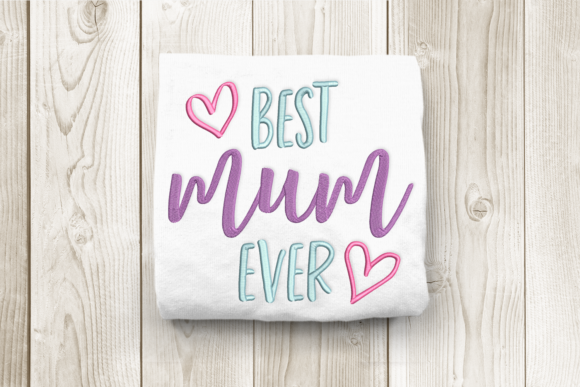
Straight from the digital embroidery file, Best Mum Ever presents a friendly, slightly rustic typographic phrase paired with two imperfect, sketch-like hearts. The hand-drawn look immediately softens the message. It doesn’t shout; it feels genuine. For a brand that trades on warmth—think a florist, a handmade bakery, or a pet boutique—this design reads as a personal note rather than a corporate logo. The separation by color changes tells me the designer thought about clean stitching order, which is a huge plus for production speed and thread trimming. My first instinct is to test this on a natural fabric like linen or unbleached cotton, where those organic hearts will feel right at home.
How ‘Best Mum Ever’ Performs on Real Business Merchandise
I immediately ran through my standard small business checklist. Here’s where this embroidery design shines across real-world applications.
Embroidered Patches That Feel Like a Gift
As an embroidered patch, Best Mum Ever becomes a powerful add-on. A handmade soap brand could sew it onto a fabric wrapping, a candle studio could press it onto a linen pouch, or a local café could offer it as a sew-on appliqué for customers who love their staff’s aprons. Because the lettering is clear and centered, the patch scales well from about 5 cm wide up to a full 10 cm chest piece. Just be mindful of stitch density on the hearts—if you’re converting to a patch with a merrowed border, keep the underlay light so the detail doesn’t become stiff.
Apron Embroidery That Builds Instant Recognition
For a bakery, coffee house, or family-run restaurant, embroidering Best Mum Ever onto a bib apron or waist apron transforms a uniform item into a subtle piece of brand storytelling. It’s not a logo, but it acts like one—it tells customers the business values something personal. I’d stitch this left-chest on a dark denim apron with a thread color that softly contrasts, maybe an off-white or pale peach, so the hand-drawn feel stays gentle. Avoid high-contrast white on black unless you intentionally want a bold, graphic patch look. For a more elegant kitchenware brand, place it near the hem of an apron as a discreet signature.
Cap Embroidery and Headwear Nuances
On unstructured dad caps and beanies, this design works beautifully. The curved text and hearts can follow the front seam without distortion if you center the phrase and digitize with a slight arc. On structured caps, the crown height demands careful placement; I’d avoid the tallest panel because the descent on the ‘y’ in ‘Mum’ could push into the seam. Better to place Best Mum Ever on the side panel or above the adjustable strap as a micro-branding element. This is where you absolutely must sew out a test on the actual cap blank to check for registration drift.
Tote Bag Designs That Sell Themselves
Give me a canvas tote, and I’ll show you how Best Mum Ever lifts the perceived value. The design sits beautifully centered on a large tote panel, leaving room for a boutique name underneath or a small logo on the reverse side. I’ve seen similar files work wonders for bookshops, plant shops, and yoga studios—the casual, heartfelt phrase makes the bag feel like a thoughtful gift rather than a logoed carrier. For Etsy sellers offering personalized mum gifts, this tote bag design combined with a subtle floral backing is a repeat seller.
Work Shirts and Uniform Accents
On a polo shirt sleeve, the design adds a gentle touch without being overly sentimental. Think of a florist team wearing a Best Mum Ever sleeve patch during Mothering Sunday week—it subtly markets their gift bundles and ties the team together. For a creative studio, a small stitch-out on the shirt placket or inside the collar band (facing out when the collar pops) becomes a hidden detail that repeat customers start to notice. The key here is to use a stabilizer that matches the shirt’s stretch and a thread color that holds up to industrial washing.
Product Packaging Accents and Boutique Merchandise
If you design packaging—muslin bags, fabric wraps, ribbon ties—a scaled-down version of Best Mum Ever can act as a seal of authenticity. I’ve stitched this kind of design onto mini fabric tags that get safety-pinned to gift boxes. It adds a handmade product feel that aligns with small-batch, artisan branding. The color-change steps in the file mean you can easily swap the heart colors to match seasonal packaging without reworking the whole design.
Where You Need to Stitch with Caution
Not every placement works straight out of the hoop. Here’s what I watch for when putting Best Mum Ever into commercial use.
- Tiny patch sizes: The text “best mum ever” has small counters inside the ‘e’ and ‘a’. Below 4 cm wide, those voids can close up with standard thread thickness. Test with a 60-weight thread or simplify the underlay for miniature versions.
- High-stitch-density details: The hand-drawn hearts may have irregular stitch lengths. If you’re stitching on a dense fabric like waxed canvas, the needle perforations could show. Use a sharp needle and a light stabilizer, not a heavy cut-away that adds bulk.
- Curved surfaces: Caps and water bottle sleeves require registration consistency. I always run at least three tests with different hooping techniques before approving a cap run.
- Dark uniforms: If you choose light thread on a black polo, any slight misalignment of the underlay will be visible. I recommend doing a dark thread on a dark garment first, then branching out.
- Textured fabric: Towelling, fleece, or loopback French terry can distort the lettering edges. A water-soluble topper is essential here to keep the hand-drawn look crisp.
- Frequent washing: The small hearts might lose definition after 50+ industrial washes if the stitch angle isn’t optimized. Ask your digitizer to lock the trims well and avoid long jumps behind open areas.
Impact on Brand Identity and Customer Connection
Using Best Mum Ever on merchandise isn’t just about decoration. It’s a deliberate move that shapes how your small business is perceived. I’ve watched coffee shops where a barista’s apron reads something heartfelt spark genuine conversations. That momentary connection builds customer trust and sets a local business apart from a chain. The phrase is universal but intimate—it speaks to family, care, and a human touch. For a handmade brand, that alignment is gold.
When you apply this embroidery file consistently across a cap, a tote, and a thank-you card, you create visual consistency that feels curated, not commercial. The viewer reads it not as “marketing” but as a shared value. In a world of sterile branding, Best Mum Ever acts as an invitation to relate. That drives buyer engagement and helps Etsy shoppers hit “add to cart” because the item already feels like a gift for someone they love.
Practical Embroidery Notes from the Machine
Before you load this onto a production run, here are the designer-level checks I never skip.
- Test in black and white first. Stitch the design in a single neutral thread on scrap fabric. This reveals any density puckering, travel stitches, or awkward gaps before you commit to color combinations.
- Check lettering at target patch size. Scale the file down to your smallest intended patch dimension and sew it out. If the “t” crossbar disappears, you need a stitch-width adjustment or a slightly larger minimum size.
- Review thread color contrast. The hearts need to be distinct from the text. If you stitch them in the same colour, the whole design flattens. I keep a swatch card of muted ThreadArt or Madeira colors to find soft pinks, corals, or golds that complement the lettering without overpowering it.
- Confirm hoop size and file fit. Even if the digital embroidery file says it fits a 4x4 hoop, measure the stitched area. Some designs creep to the edge of the safe zone. I always leave a 5 mm margin for hooping error on fast production runs.
- Test on the real fabric you’ll sell. Not a smooth sateen if your product is a textured denim apron. The actual purchase fabric dictates stabilizer choice and presser foot pressure. I keep notes for every substrate.
- Use the right stabilizer for the job. For patches on woven backing, a medium-weight cut-away. For caps, a tear-away with a light fusible. For delicate knits, a self-adhesive water-soluble topper stops stitches sinking in.
- Create a printable mockup for client approval. Before stitching a single real item, place the design on a product photo. This saves time and materials. Your small business clients will want to see exactly how Best Mum Ever looks on their apron, tote, or cap before you touch their garments.
- Compare it beside other design assets. If you sell bundles or subscription boxes, make sure the style of Best Mum Ever doesn’t clash. The hand-drawn hearts may not sit well next to ultra-modern, geometric branding. Curate your collection so this piece feels intentional.
- Confirm commercial licensing. The product description does not explicitly state if this file comes with a commercial embroidery license for resale. I always contact the original designer and ask for clear written permission before using the design on items sold to the public. Never assume—one copyright misstep can damage your reputation.
Where This Design Becomes a Quiet Profit Driver
I don’t see Best Mum Ever as a seasonal-only asset. Mother’s Day and Mothering Sunday are obvious peaks, but small businesses can leverage it year-round. A pet portrait artist could add a “Best Dog Mum” version by swapping the script—many digitizers will customize it. A children’s clothing brand can stitch it inside a dress hem for a hidden mum message. A wellness studio can offer it as a limited-edition embroidered patch on gym towels. The emotional pull of the phrase never really expires.
From a business angle, this embroidery design works because it bridges the gap between a generic branded item and a personal, story-driven product. When I apply it to a batch of linen totes or a lineup of café aprons, the reaction is consistently positive. Customers pick up the item, smile, and often say, “I know someone who would love this.” That’s the kind of organic marketing that no paid ad can match.
Final Verdict for the Makers and Merch Creators
If you’re running a small embroidery shop, an Etsy store selling custom apparel, or a boutique building your own merchandise line, Best Mum Ever deserves a spot in your tested library. It’s not a complex, stitch-heavy illustration that will choke your machine; it’s a clean, heartfelt statement that holds up on patches, tote bags, caps, and aprons. Just follow the practical checks: respect the scaling limits, control your thread contrast, and always mock up before production. For shops that want to communicate warmth and authenticity without plastering a logo everywhere, this digital embroidery file delivers exactly what it promises—and a little bit more.